Software
Hospital Management System in Pakistan: 2026 Guide
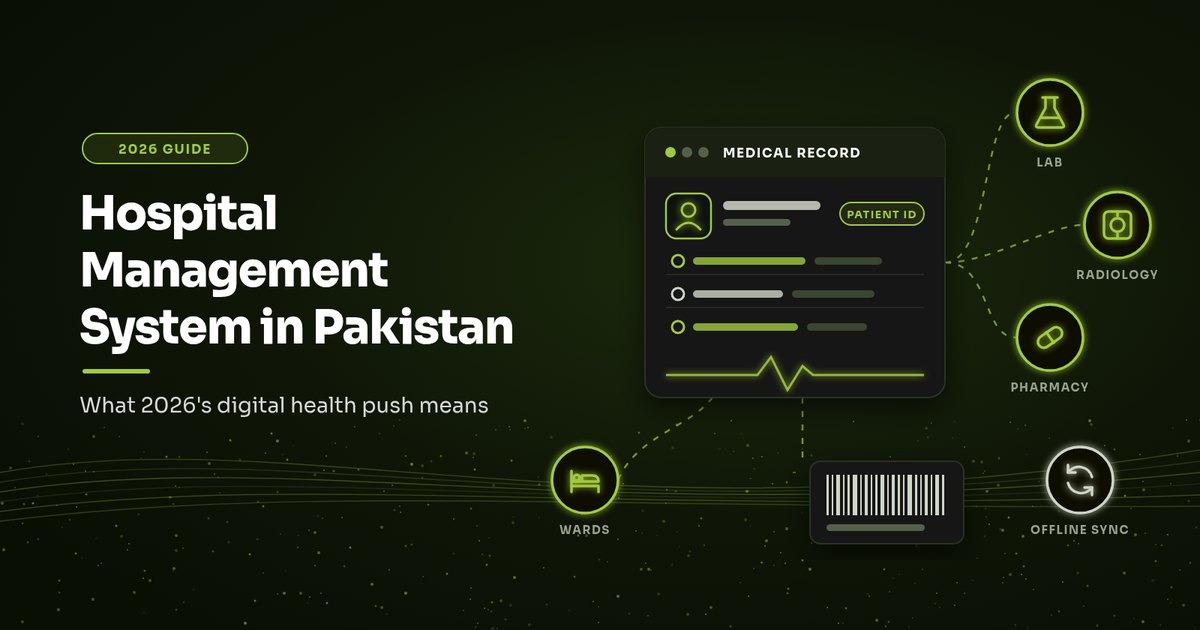
October 2026 has been a busy month for health records in Pakistan. In Islamabad, PIMS switched on a digital patient system that links its five hospitals. In Karachi, Sindh started electronic medical records at its first basic health units. At federal level, ministers spoke about a national health information system and a CNIC-based medical record for every citizen. For anyone running, or planning, a hospital management system in Pakistan, these projects show where things are heading. This article looks at what they mean for the software itself.
What is a hospital management system?
A hospital management system (HMS, often called HMIS in the public sector) is the software that runs a hospital’s day-to-day work: patient registration, appointments and OPD queues, doctors’ notes, lab and radiology orders, pharmacy, wards, billing and reports. A clinic management system does the same for a smaller practice. An electronic medical record (EMR) or electronic health record (EHR) is the clinical part: the patient’s history, diagnoses, prescriptions and results in one digital file.
The difference matters less than it used to. The 2026 projects treat the patient record as the centre, with every department reading and writing to it.
What is happening in 2026
One Patient, One ID at PIMS
The Pakistan Institute of Medical Sciences has put a digital patient management system called “One Patient, One ID” into service at a cost of more than Rs1.25 billion. It connects all five PIMS hospitals and 24 departments and services, including laboratories, X-ray, reception, wards, emergency and OPDs. Registration and diagnostics now sit on one platform, so doctors can see a patient’s records on a computer. The software was developed by the National Information Technology Board, and the next phase adds a paperless system and barcode technology (24 News HD, 27 Oct 2026).
A CNIC as your medical record number
The wider national project carries the same name. Under it, each citizen’s CNIC number will serve as a unique medical record number, so authorised healthcare providers can see a patient’s history and earlier records across different hospitals. On 6 October the federal health minister directed that it be made operational at the earliest, with clear terms of reference and a third-party audit (APP, 6 Oct 2026).
Sindh’s electronic medical records
Sindh has made digital data systems live at 18 basic health units. It plans to reach 150 centres by February 2027 and to have an EMR across all primary healthcare centres by 2028. The record will hold medical history, OPD visits, medicines given, emergency care, maternal and child health, nutrition and family planning data (Dawn, 22 Oct 2026). The province also plans to connect its existing health information systems with the EMR, rather than leave the data in separate systems (Medical News PK, 21 Oct 2026).
A national health information system and a proposed law
The Minister of State for Health has said the government is working on a national health information system for secure exchange of health data between federal and provincial authorities. Data-sharing agreements have been signed with Sindh and Balochistan. The ministry is also developing a proposed Health Security Act on the protection, privacy and responsible use of health data. The minister stressed that digital health needs accuracy, reliability and interoperability, not just data collection (Dawn, 21 Oct 2026).
What this means for hospital and clinic software
None of these projects sets technical rules for private hospitals yet, and the Health Security Act is still a proposal. But they point clearly to what a hospital management system in Pakistan will be expected to do.
Use the CNIC as the patient key
If the CNIC becomes the national medical record number, systems that file patients only under an internal MR number will struggle to share records. Capture and validate the CNIC at registration, keep a separate route for children and patients without one, and guard against duplicate files for the same person.
Plan for data exchange from the start
The words that keep coming up are interoperability and data sharing. In practice that means clean, structured data (coded diagnoses and tests rather than free text alone), a documented API, and the ability to export a patient’s record in a standard format. A system that can only print reports will be hard to connect to a provincial or national platform later.
Connect departments, not just screens
What changed at PIMS was that registration, labs, radiology, wards and OPD now share one record. The same applies at any scale. A lab result should reach the doctor’s screen against the right visit, and a prescription should reach the pharmacy without being retyped.
Barcodes and paperless workflows
PIMS’s next phase adds barcodes. In a hospital, that usually means printed labels that tie a patient, a sample and a prescription to the same record. It is cheap to build in early and expensive to add later.
Work when the internet does not
In Balochistan, health workers report from more than 1,650 facilities, and a mobile app lets them record data offline and sync once a connection returns (report on Balochistan’s rollout, Aug 2026). Many clinics face the same power and network gaps. Offline-first mobile apps and a web app that queues entries safely keep care moving during outages.
Privacy, roles and audit trails
Health data is about as sensitive as data gets. Give each role (reception, nurse, doctor, lab, billing) only the access it needs, log who viewed or changed a record, and encrypt data stored and in transit. These steps line up with Pakistan’s wider direction on data, covered in our post on the National Data Governance Policy 2026, and with the proposed Health Security Act.
FAQ
What is a hospital management system?
It is software that runs a hospital’s operations, from registration and appointments to labs, pharmacy, wards, billing and the patient’s medical record.
What is the difference between a clinic management system and a hospital management system?
A clinic management system covers a smaller practice: appointments, consultations, prescriptions and billing. A hospital system adds departments such as wards, emergency, labs and radiology, all sharing one patient record.
Is there an electronic health record system in Pakistan?
Several are being rolled out. PIMS in Islamabad has linked its five hospitals, Sindh has started EMRs at basic health units with a 2028 target for all primary centres, and the federal government is working on a CNIC-based universal medical record.
What is the purpose of a hospital management system?
To keep one accurate record per patient, cut paperwork and repeat tests, and let every department see the information it needs at the right time.
If you are planning a hospital or clinic system and want to talk it through, get in touch.
Related posts
Planning a software project?
Tell us what your school or business needs and our team will suggest the right web, mobile, ERP or AI solution.
Talk to our teamRelated: Custom Software Development Web App Development Mobile App Development Software House Islamabad & Rawalpindi Software House Peshawar