Software
Raast Dynamic QR Code Payments in Billing, POS and ERP Software
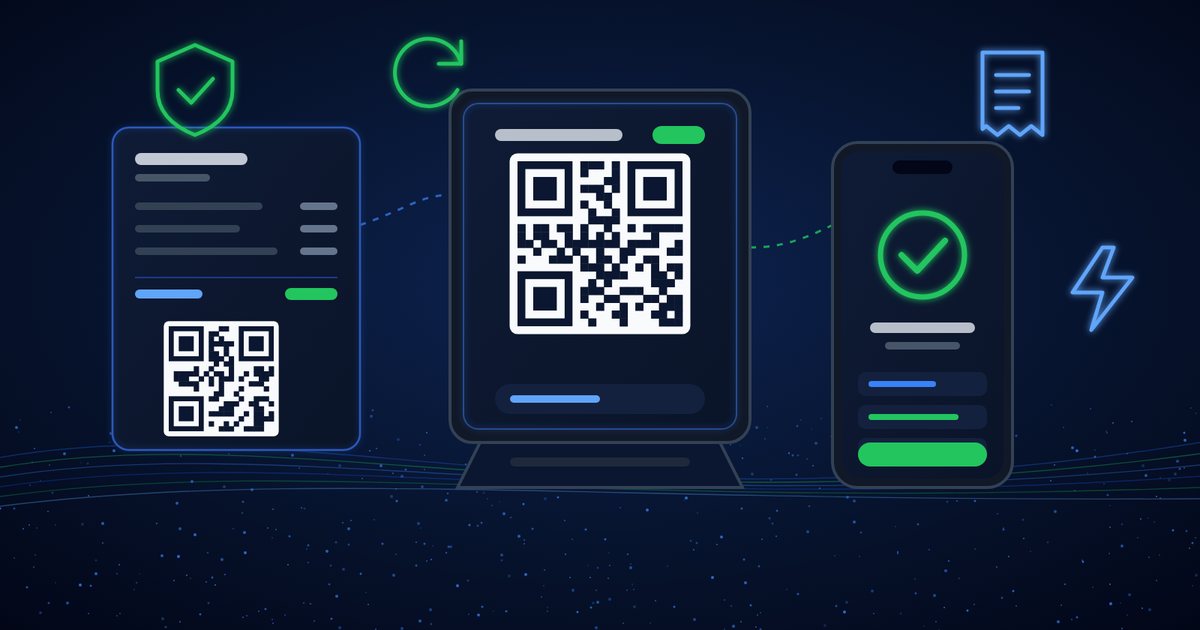
Pakistan’s digital payments push has moved from campaigns to instructions. At a Cashless Pakistan meeting at the Finance Division on 13 October 2026, the government said the number of merchants accepting electronic payments grew fourfold last fiscal year, and that it has reached approximately 75% digital payment acceptance across its centralised and self-accounting entities (PID, 13 Oct 2026). For organisations that issue bills or run a till, one practical part of that shift is the Raast dynamic QR code.
For most organisations, the question is no longer whether to accept Raast, but how it fits into the software that creates bills, records sales and closes the books. This article looks at dynamic QR payments from a development point of view.
What Raast P2M is
Raast is Pakistan’s national instant payment system. It is run by a wholly owned subsidiary of the State Bank of Pakistan (SBP) (SBP, Raast). Its Person-to-Merchant (P2M) service lets businesses accept payments through QR codes, a Raast alias, an IBAN or a Request to Pay (RTP) (SBP Circular 04 of 2023).
The same circular sets out several points that matter to anyone designing a payment flow:
- Request to Pay Now is a payment request from the business to the payer with a shorter expiry. Request to Pay Later has a longer expiry.
- Raast Merchant Service Providers must offer merchants both static and dynamic QR codes.
- Banks and other regulated entities must not charge customers a fee for these payments, and must give customers instant confirmation or rejection.
- Merchants must receive payment confirmation or rejection immediately after their provider receives it from Raast.
- Customers can raise a return or refund request through Raast, and the merchant accepts or rejects it through its provider’s merchant interface.
Businesses are onboarded by a Raast Merchant Service Provider, which is a bank or other SBP-regulated entity. SBP’s own guidance is that merchants enable Raast through their bank or payment service provider (SBP, Join Raast). Providers may also embed Raast checkout into partner apps and enter into agreements with third parties offering billing and invoicing services (SBP Circular 04 of 2023).
Static vs dynamic QR: why the difference matters to your software
A static QR code is the same for every payment and identifies who is being paid. When many customers pay the same code, the software must work out afterwards which payment belongs to which invoice.
A dynamic QR code is generated for one transaction. In the Finance Ministry’s concept note for utility bills, the dynamic code carries the bill amount and the recipient’s details, so “no manual input is required” and, on scanning, the payment is processed and reconciled (Business Recorder, 16 Aug 2025). For any organisation that issues invoices, this is the key difference: the link between a payment and the document it settles is made when the code is created, not by someone matching bank statements at month-end.
How a dynamic QR billing flow works
The Finance Ministry’s proposal for utility companies describes the flow clearly (Business Recorder, 16 Aug 2025):
- When a bill is generated, the billing system also generates a Raast dynamic QR containing the customer-specific amount and the company’s IBAN.
- The QR is printed on the paper bill or shown on the digital version.
- The customer scans it with any Raast-enabled banking app and confirms.
- The customer’s account is debited and the biller’s account is credited, with real-time reconciliation.
The note adds that QR expiry can be aligned with the bill due date (custom expiry may need support from participating banks and Raast) and that integration “will require technical development to generate dynamic QRs during bill creation”. That work sits with the billing system.
What changes inside POS, ERP and apps
Point of sale
At a counter, the POS should request a dynamic QR for the exact sale total and show it on a customer-facing screen or receipt. Because providers must pass on confirmation as soon as Raast confirms the payment, the POS should mark a sale as paid only on that confirmation, not when the customer shows a phone screen. It also needs a clear path for expired codes, cancelled sales and lost connections.
Billing and ERP
In an ERP or billing system, each invoice should hold the reference of the QR or payment request created for it. When confirmation arrives, the system posts the receipt against the right invoice automatically. Refunds need their own workflow: since customers can request returns through Raast and merchants accept or reject them, the ERP should record that decision and raise the matching credit note so finance and sales see the same figures.
Web and mobile checkout
For online orders, Request to Pay Now suits a live checkout where the customer approves the payment straight away. Request to Pay Later suits invoices and instalments that the customer settles within a longer window. SBP required existing merchant-acquiring entities to enable Raast acceptance at their merchant locations and e-commerce checkouts by 31 March 2024 (SBP Circular 04 of 2023).
Security
SBP asks merchant service providers to take “special care” to safeguard the systems and devices at the merchant end (SBP Circular 04 of 2023). Your own software is part of that merchant end. Payment confirmations should be verified on the server, logged with an audit trail and never trusted from the user’s device alone.
Where Raast QR is already expected
- Utility and government billing. As reported in August 2025, the Finance Ministry advised utility providers under the Cabinet, Power, Petroleum, Telecom and Interior divisions to work with their banks to integrate dynamic Raast QR generation into their billing systems, and to print or display the codes on all bills (Business Recorder, 16 Aug 2025). In March 2026, the Prime Minister directed all government institutions to provide QR codes on all bills (The Nation, 4 Mar 2026).
- Fuel stations. Until 31 January 2027, SBP has capped the merchant discount rate on card payments for fuel at PKR 1.00 per litre, and told banks and payment providers to work with fuel stations to enable Raast QR acceptance during that period (SBP Circular Letter 01 of 2026).
- SECP-regulated entities. The SECP directed NBFCs, insurers, modarabas, securities brokers and other licensed intermediaries to adopt and display digital payment options, particularly Raast QR, at their outlets by 31 October 2025 (The Nation, 27 Aug 2025).
Decisions to settle before development starts
- Acceptance modes: dynamic QR, Request to Pay Now or Later, or a mix by channel.
- Where codes are generated: on the server at bill or sale creation, so every code is tied to one record.
- Expiry rules: matched to due dates for bills and to short windows at the counter.
- Reconciliation: automatic posting on confirmation, with an exceptions queue for anything unmatched.
- Refunds and reversals: who approves them, and how they appear in the ledger.
- Reporting: daily settlement views finance can check against bank statements.
Settled early, these keep Raast inside the order-to-cash process instead of beside it. For related work, see our ERP and POS software, web application and mobile app development pages.
Frequently asked questions
What is Raast P2M?
Raast P2M (Person-to-Merchant) is SBP’s interoperable service for businesses to receive payments by QR code, Raast alias, IBAN or Request to Pay (SBP Circular 04 of 2023).
What is a Raast dynamic QR code?
It is a QR code generated for a single payment, carrying the amount and the recipient’s details, so the customer only scans and confirms (Business Recorder, 16 Aug 2025).
Can utility bills be paid through a Raast QR code?
Yes, where the biller prints or displays one. Utility providers have been advised to put dynamic Raast QR codes on their bills so customers can scan to pay from any Raast-enabled banking app (Business Recorder, 16 Aug 2025).
Is there a Raast payment gateway API?
SBP’s launch circular says Raast technical specifications were shared with regulated entities; it does not describe a public API for businesses. A business connects through the bank or payment service provider that onboards it as a Raast merchant, and providers may embed Raast checkout into partner apps (SBP Circular 04 of 2023).
What is Raast Request to Pay?
It is a payment request sent from the business to the payer. “Now” requests have a shorter expiry and “Later” requests a longer one (SBP Circular 04 of 2023).
If you are planning Raast payments in your billing or POS software, contact us.

Planning a software project?
Tell us what your school or business needs and our team will suggest the right web, mobile, ERP or AI solution.
Talk to our team